
The People’s Assembly
William TellThis flow follows the Rütli gathering as a carefully structured exercise in representation, deliberation, and collective decision.
increasing Bearing strength in each event
 decreasing
Bearing strength in each eventdecreasingRepresentatives Arrive

Representatives Arrive
A meeting assembled in secrecy
Delegates from the cantons reach the meadow by boat and mountain paths. Their precautions reflect the risk of exposing a political gathering to the governors’ spies.
A claim to represent the people
Rosselmann argues that the assembled leaders stand for the wider community and may conduct a council according to older custom. The meeting’s legitimacy rests on common purpose despite its unusual setting.
The arrival transforms a hidden patch of ground into a political space. The participants do not merely discuss grievance; they attempt to recreate the deliberative order they believe the governors have violated.
Authority of the Council
Authority of the Council
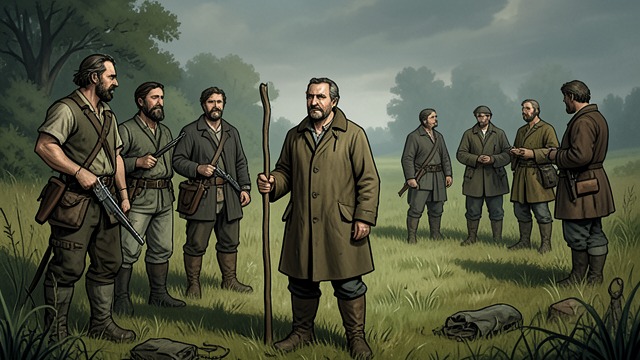
A question of procedure
The delegates discuss who should preside and whether the traditional order of precedence belongs to Uri or Schwyz. They treat procedure as a matter of shared respect, not a trivial interruption.
An agreed arrangement
Rosselmann proposes that Uri lead in battle while Schwyz presides in council. The solution honors both cantons and avoids turning the meeting into a contest for rank.
The exchange models the political culture the Confederates hope to defend. Their alliance requires negotiation, accommodation, and agreement rather than command by a single dominant authority.
Reding Chosen as Presiding Elder
Reding Chosen as Presiding Elder
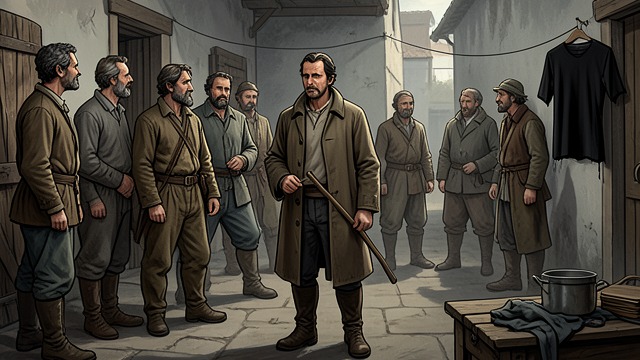
A leader selected
The delegates choose Itel Reding to preside because of his age and standing. They distinguish his freedom and judgment from mere social status, declining to treat a bondman as eligible for the judicial office.
A promise of justice
Reding swears by the stars to remain faithful to justice and right, despite the absence of the formal books used in ordinary assemblies. The oath gives moral weight to the procedures adopted in secret.
The choice portrays legitimate leadership as something conferred by the community. Authority is present, but it must be justified through fairness and consent.
Debate over Timing
Debate over Timing
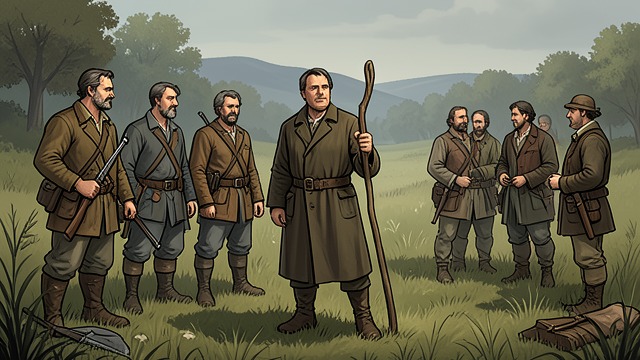
Competing assessments
The delegates weigh an immediate attack against a planned rising at Christmas, when people can gather at the fortresses under ordinary pretexts. Some stress secrecy; others fear that delay will strengthen the governors.
A decision by vote
The majority choose the later coordinated action. Their decision is not unanimous, but the disagreement is handled within the council rather than allowed to dissolve it.
The moment shows that collective action does not require every participant to hold the same judgment. It requires them to accept a common decision while circumstances remain subject to change.
The Council’s Oath
The Council’s Oath
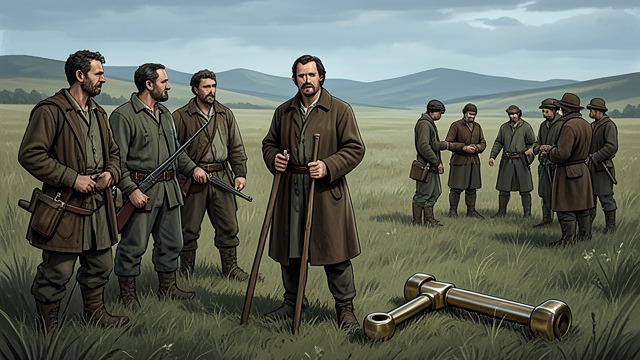
Words made binding
As daylight reaches the mountains, the Confederates swear to remain united in danger and death. The change from night to morning gives the vow a public and ceremonial force.
A disciplined departure
They separate quietly and return to their homes, instructed to continue ordinary life while keeping the agreement secret. The assembly ends not with an immediate attack but with an obligation carried back into each community.
The council’s method combines democratic deliberation with careful concealment. Its power lies in turning a temporary meeting into a durable network of trust.
At night, at Rütli Meadow
Early in the Rütli deliberations
Early in the Rütli deliberations
Late in the Rütli deliberations
At dawn after the deliberations
